
Why manufacturers are moving production closer to the markets they serve, and what that means for trade into and out of Mexico.
Nearshoring is the relocation of production or sourcing to a country close to the market it serves. For North America, Mexico has become the most discussed destination. This article explains what is driving the shift, why Mexico features so prominently, and what importers and exporters should consider when they plan supply chains through the country.
Why supply chains are moving closer
For several decades, many manufacturers concentrated production in a small number of distant, low-cost locations. Long supply chains worked well while freight was predictable and trade policy was stable. Recent years have tested that model. Port congestion, container shortages and sudden changes in freight rates showed how exposed long routes can be. Changes in tariffs and trade policy added a further layer of uncertainty.
Nearshoring responds to these pressures. Shorter routes reduce transit times and the stock held in transit. They make it easier to adjust production to demand, to visit suppliers and to resolve quality issues. For many companies the aim is not to leave existing suppliers altogether, but to add capacity closer to the customer and reduce dependence on any single region.
Why Mexico
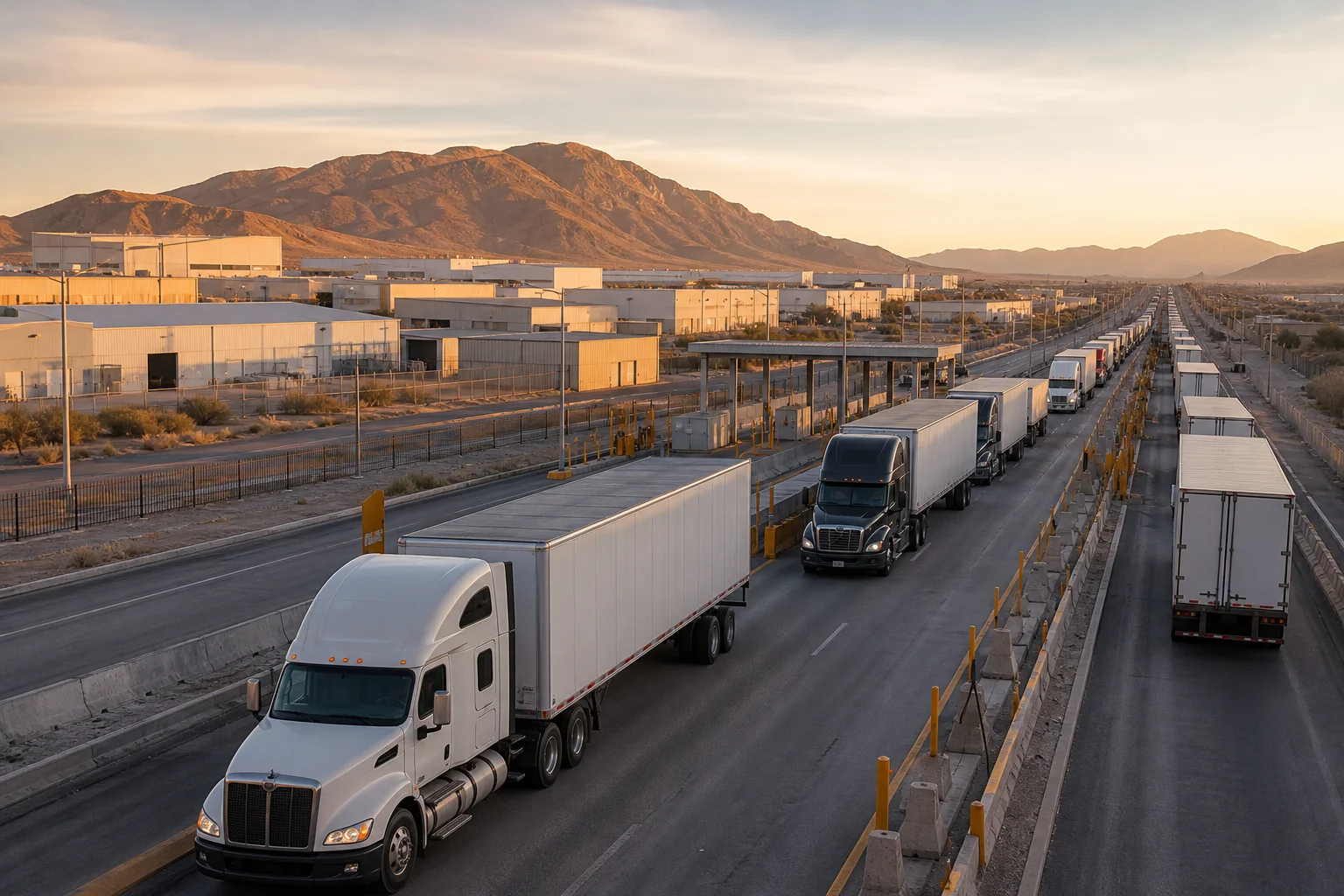
Mexico shares a long land border with the United States and has extensive road and rail connections to it. Goods can move from a Mexican factory to a US distribution centre by truck or train, without an ocean crossing. The country also has Pacific and Gulf of Mexico ports that connect it to Asia, Europe and South America.
Trade between Mexico, the United States and Canada is governed by the United States-Mexico-Canada Agreement (USMCA, known in Mexico as T-MEC), which entered into force in 2020. Goods that meet its rules of origin can qualify for preferential treatment within the region. Mexico has also concluded free trade agreements with many other countries, including the European Union.
Mexico has an established manufacturing base in sectors such as automotive, electronics, electrical equipment, machinery and textiles. Programmes such as IMMEX allow qualifying manufacturers to import inputs temporarily for processing and re-export under specific conditions.
What it means for importers and exporters
Nearshoring increases demand for the inputs that factories in Mexico need: machinery, components, raw materials, energy equipment and construction materials for new industrial sites. Many of these inputs are still sourced from outside North America, which makes accurate import planning essential.
Importing into Mexico requires registration in the Padrón de Importadores, the national register of importers, and some goods require registration in specific sectors. Correct tariff classification, valuation and documentation determine the duties payable and whether preferential treatment applies. Rules of origin require careful records of where inputs come from and how they are processed.
For exporters, the same discipline applies in reverse. A product made in Mexico for the United States or Canada may only benefit from the agreement if its origin can be demonstrated. Documentation prepared at the start of the supply chain affects the cost and speed of delivery at the end.
Planning a route through Mexico
Companies considering Mexico as a production or distribution base should start with three questions. Which inputs will be imported, and from where. Which markets the finished goods will serve, and under which trade agreements. And which partners will manage the documentation, customs clearance and logistics on each side of the border. Clear answers to these questions reduce delays and allow the benefits of a shorter supply chain to be realised.